
It is late 2025, and the U.S. housing market is acting strange. If you look at one set of charts, everything is fine. Median home prices are still climbing. Equity is at record highs. But if you look at the filings in the county clerk’s offices, a different picture emerges.
The old logic was simple: If a homeowner got into trouble, they sold the house, paid off the bank, and walked away with cash. High prices were supposed to be the ultimate foreclosure shield.
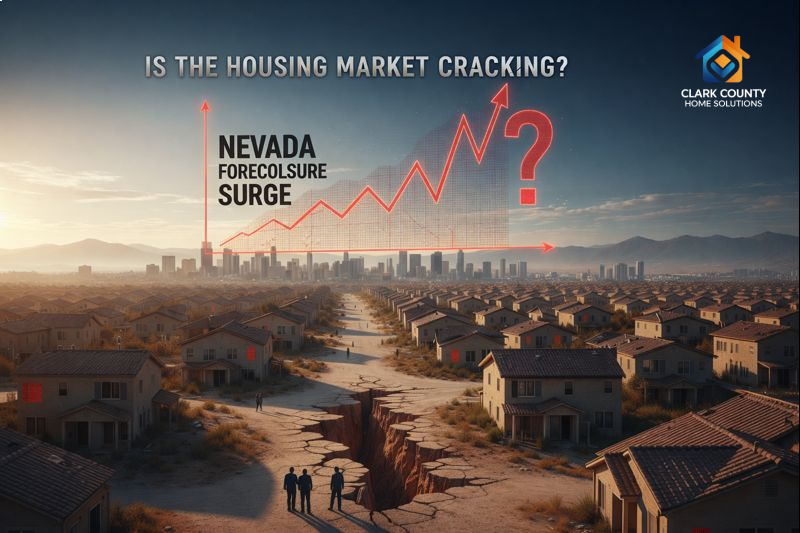
That shield is cracking. New data shows Nevada has quietly climbed to the number one spot in the nation for foreclosure filings. The Las Vegas-Henderson metro area is right behind it, ranking third among major U.S. metros.
We are seeing a collision of high asset values and low cash flow. Here is why the “easy exit” is not so easy anymore, and why the desert is flashing a warning sign for 2026.
The Nevada Numbers Don't Lie
While the national news talks about interest rate cuts or inventory shortages, distress is building in the Southwest.
Nevada is now the clear outlier. The state has the highest foreclosure rate in the country. In November alone, one in every 2,829 housing units had a foreclosure filing. That is not a rounding error. It is a statistical separation from the rest of the pack.
Zoom in on the map, and it gets more specific. The Las Vegas-Henderson-Paradise metro area is not just contributing to the problem; it is driving it. Ranking third nationally among metros with over 200,000 people, the area saw one filing for every 2,427 housing units.
This leads to the obvious question: If homes in Henderson are selling for top dollars, why are people losing them to the bank?
The "House Rich, Cash Poor" Trap
We need to stop assuming equity equals safety.
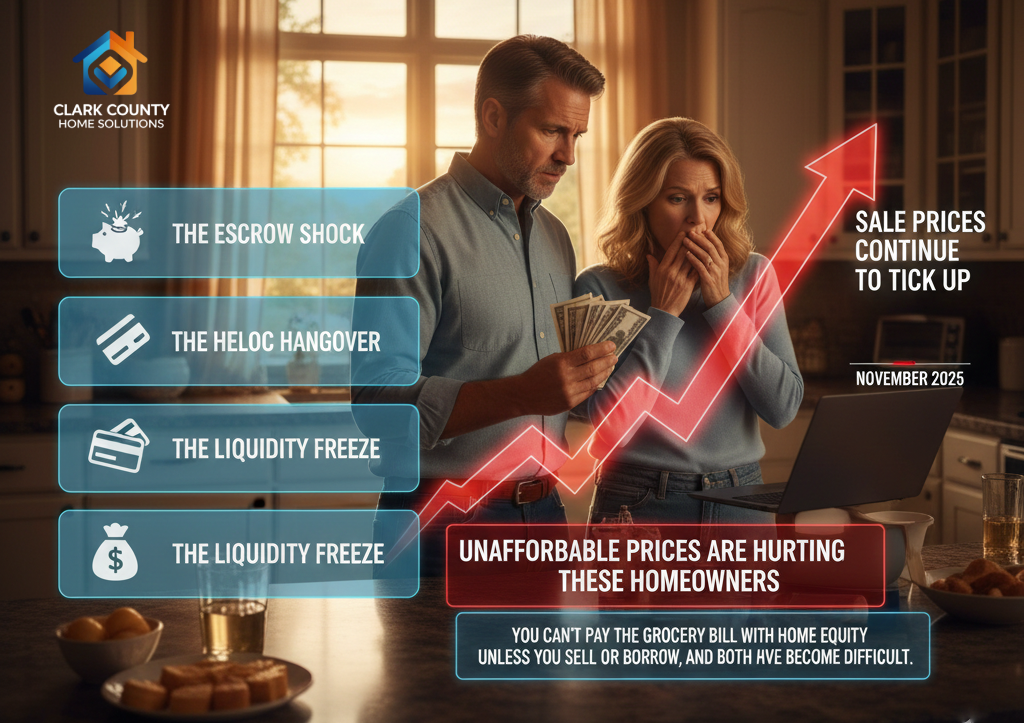
According to Realtor.com, sale prices continued to tick up in November 2025. But you can’t pay the grocery bill with home equity unless you sell or borrow, and both of those options have become difficult.
Here is why unaffordable prices are hurting these homeowners.
1. The Escrow Shock
The mortgage principal might be fixed, but the escrow account is volatile. When home values skyrocket, tax assessments eventually catch up.
In Nevada, where values surged post-2020, tax bills are landing with a thud. Add in the explosion of insurance premiums, and you have homeowners whose monthly payment has jumped $400 or $500 overnight. If they were already stretching to buy the house, that increase would be fatal.
2. The HELOC Hangover
For the last few years, homeowners treated their equity like a checking account. They took out Home Equity Lines of Credit (HELOCs) to pay off credit cards or renovate kitchens.
The problem? Most HELOCs have variable rates. With rates staying stubborn, the interest-only payments on those lines have doubled. The equity is technically there, but it has already been spent.
3. The Liquidity Freeze
This is the part nobody talks about. High prices shrink the buyer pool.
If a distressed seller in Las Vegas needs to offload a house this week to stop an auction, they need a cash buyer or a highly qualified borrower. But at current price points, there are fewer buyers capable of moving that fast.
The house sits. The “Days on Market” counter ticks up. The bank gets impatient. The foreclosure occurred because the seller could not find a buyer at the “market value” price fast enough.
The Return of Involuntary Inventory
For the last five years, almost every “For Sale” sign you saw was voluntary. People were moving because they wanted to.
That is changing. We are seeing the return of involuntary inventory.
For real estate investors, the playbook is shifting. The auction block is getting crowded again. The “Pre-Foreclosure” list is no longer a waste of time, it is likely the best source of leads in 2026.
We will also see a surge in “subject-to” transactions. These sellers have low interest rates on their primary mortgages but are drowning in other debts. They do not need to sell for a profit; they just need someone to take over the payments to save their credit.
The Outlook
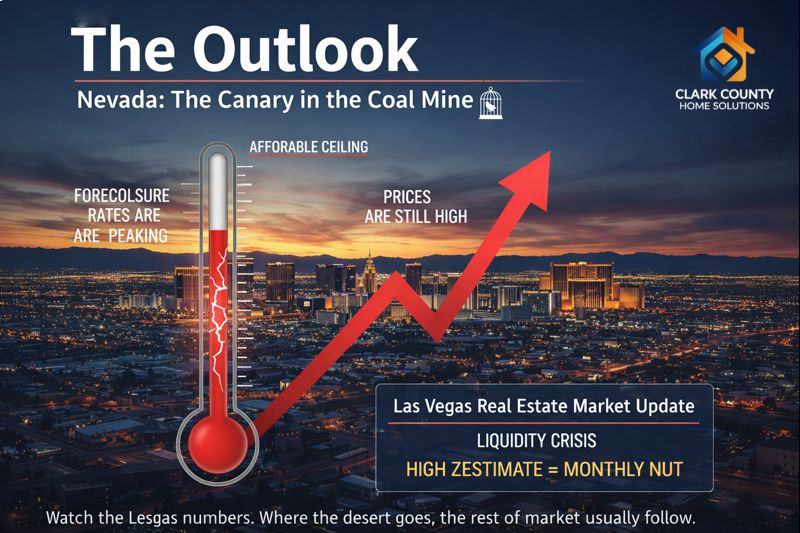
Nevada has always been the canary in the coal mine. It booms hard, and it corrects fast.
The fact that foreclosure rates are peaking there while prices are still high suggesting we are hitting an affordable ceiling. It is not a 2008-style crash where values evaporate overnight. It is a liquidity crisis.
Homeowners realize a high Zestimate does not matter if you cannot make the monthly nut. Watch the Las Vegas numbers. Where the desert goes, the rest of the market usually follows.
Frequently Asked Questions
Why are foreclosures rising if home prices are high?
High prices increase property taxes and insurance premiums, which raise monthly payments. Also, many homeowners borrowed against their equity (HELOCs) and can no longer afford the higher interest rates on those loans.
Is the housing market crashing in 2026?
Not exactly. A “crash” usually means values drop 20% or more. Currently, values are holding, but “distress” is rising. We are seeing more forced sales because people cannot afford their monthly payments, even if the house is worth a lot.
What is "involuntary inventory"?
This refers to homes listed for sale because the owner has to sell, not because they want to. This usually happens due to divorce, job loss, or foreclosure. It often leads to better deals for buyers.
Is Las Vegas a good place to invest right now?
Yes, but you have to be careful. The rising foreclosure rate means there will be more motivated sellers and auction opportunities, but you need to ensure the numbers work with today’s high holding costs.
How do I stop a foreclosure if I have equity?
If you have equity but no cash, look for a “bridge loan” or consider selling to a cash buyer. You will get less than full market value, but you will get the money instantly to pay off the bank and save your credit score.