
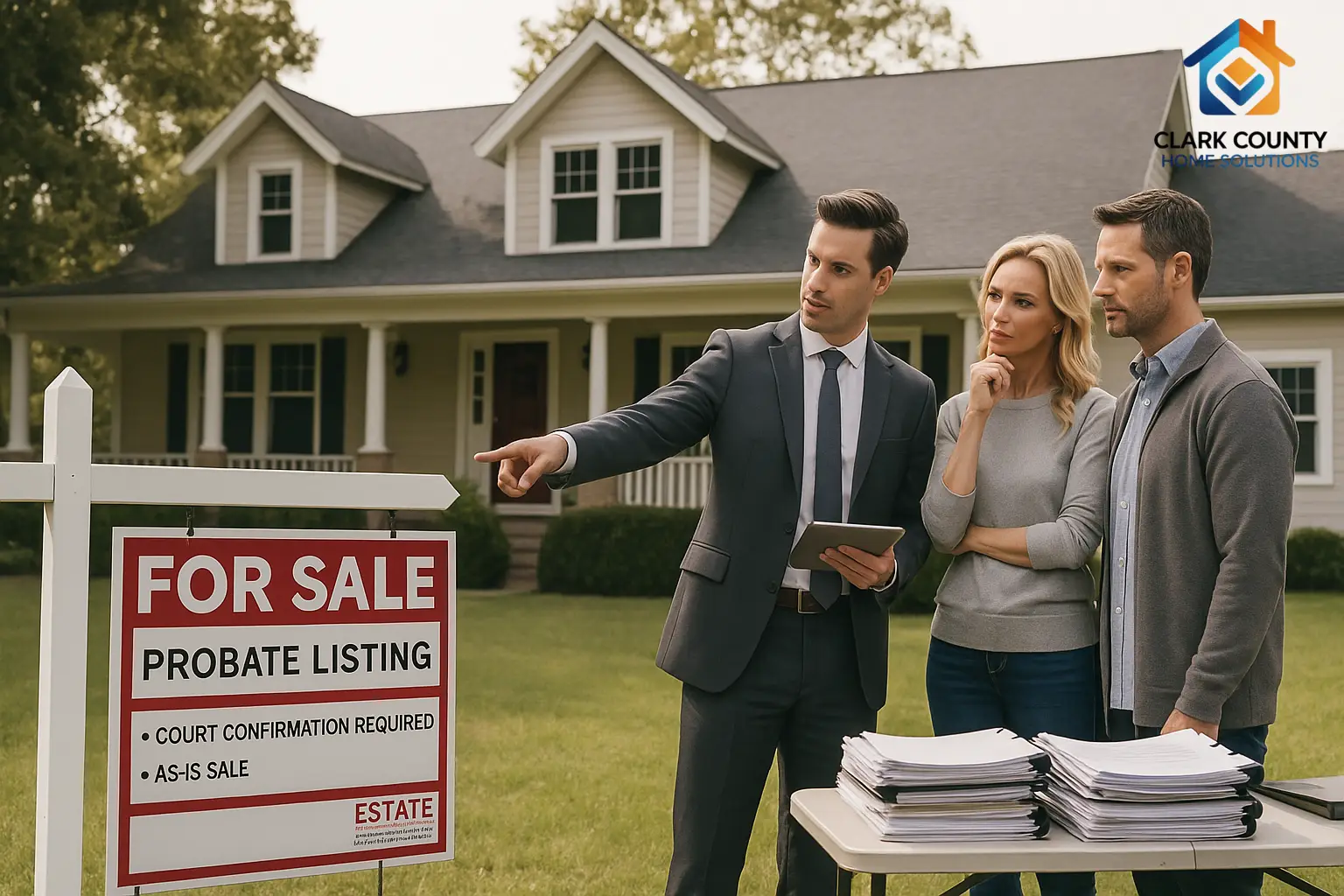
Have you ever seen a home for sale and heard the term “probate sale”? It sounds a bit serious and, honestly, a little confusing. Many peoples hear it and are not sure what it means. Does it mean the house is a bargain? Does it mean it’s a legal mess? Let’s walk through it together, step by step.
A probate listing in real estate is a home that is being sold through a special legal process. This process is called probate. It happens after a homeowner passes away. The probate court steps in to make sure the person’s home, money, and other things are handled correctly.
This process makes sure all their bills are paid. It also makes sure their property goes to the right people. In this blog, we will explain this process in simple terms and also cover what a probate listing in real estate is and exactly how it works.
What is Probate in Real Estate?
When a person passes away, they leave behind an estate. An estate is just a word for everything they owned. This includes their house, car, bank accounts, and personal items.
Probate court is a special court that deals with the process by which the estate is settled. You can imagine the court as a referee in a game. Its role is to ensure that the rules are followed by everyone.
The first and foremost objective is to settle any final bills or taxes that the deceased person was liable for. This is known as estate debt repayment. Once all debts have been cleared, the court ensures that the remaining assets are handed over to the rightful people. These people are called the heirs and beneficiaries. Heirs are the relatives, while beneficiaries are the people mentioned in the will.
Who is in Charge of the Sale?
The court does not handle the sale all by itself. It appoints someone to be in charge. This person is called the Executor of estate. If the person did not have a will, the court appoints someone called an Administrator.
This executor has a big job. They are responsible for gathering all the assets, paying the bills, and working with the court. They are the person who will hire a real estate agent and manage the sale of the house.
When Does a Home Become a Probate Listing in Real Estate?
A home does not always go through this process. If a home was owned jointly, like with a husband and wife, it usually passes to the surviving owner.
But a home often enters probate if the person who passed away was the only owner. It might also happen if the owners were listed in a way that did not automatically pass the home along.
The home must be sold for a few common reasons. The estate might need money to pay debts. Or, the heirs might live far away and decide they would rather sell the house and split the money.
When the executor gets the court’s permission to sell, the house officially becomes a probate listing in real estate. This is when you will see it show up for sale online or with a sign in the yard.
The Probate Sale Process
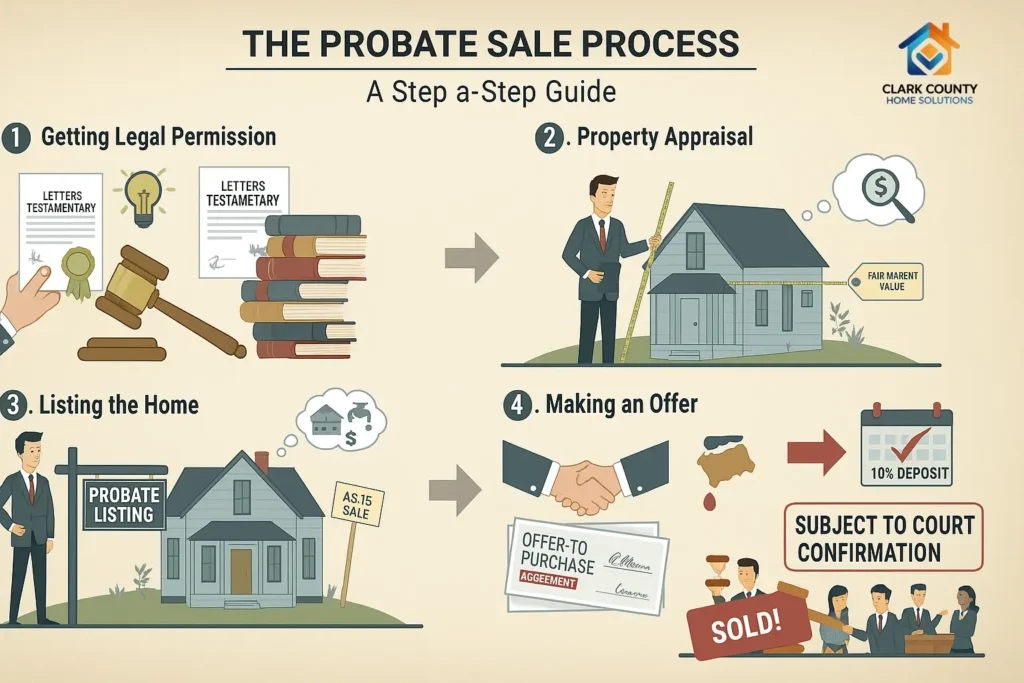
The probate sale process is different from a normal home sale. It has more steps and rules. It is very important to follow them exactly. This is a journey, and it helps to know the map.
The First Step: Getting Legal Permission
Before anything can be_ sold, the executor must go to the probate court. The court gives the executor legal papers to prove they are in charge.
These papers are often called Letters of Administration or Letters Testamentary. These “letters” are the official document that gives the executor the power to act for the estate. This is the green light to start the process
Finding the Home's Value: The Property Appraisal
Next, the court needs to know what the house is worth. The executor must hire a professional, independent appraiser. This is for a formal property appraisal.
This appraisal gives the court a fair market value for the home. This value is very important. It sets the starting price. The court wants to protect the estate. It will not let the house be sold for too little money. This appraisal value is the base for the probate listing in real estate.
Listing the Home: How Probate Listings Work
Now, the executor can hire a real estate agent. It is smart to hire a probate listing agent. This is an agent who has special training and experience with these sales. They understand the extra paperwork and rules.
This is the part that answers, how probate listings work. The agent lists the home, takes photos, and markets the property. But there is a big difference. Most probate homes are sold “as is.”
“As is” means the estate will not pay for any repairs. The buyer gets the house in its current condition. If the roof leaks or the plumbing is old, that is the buyer’s responsibility to fix after the sale.
Making an Offer on a Probate Property
If you want to buy the home, you make an offer, just like any other home. But your offer is usually not final. In many probate sales, the buyer must include a deposit, which is often 10 percent of the offer price.
The executor reviews the offers and accepts one. But this is not the end of the story. It is really just the beginning of the next phase.
The Waiting Game: Subject to Court Confirmation
Here is a big rule. The accepted offer is “subject to court confirmation.” This is a key part of probate property rules. It means a judge must approve the sale. This is what people call a court-approved real estate sale.
The executor’s attorney will ask the court for a hearing date. This part of the probate home sale timeline can take time. It often takes 30 to 45 days, or even longer, just to get a day in court.
During this waiting time, the sale must be advertised. The ad will include the accepted offer price. This is done to let other people know the house is being sold and at what price.
The Big Day: The Confirmation Hearing and Overbidding
The confirmation hearing is where things get interesting. This hearing is open to the public. The buyer who made the first offer must show up.
The judge will ask if anyone in the courtroom wants to buy the property for more money. This is called the overbidding process (probate auctions). It’s like a mini auction right in the courtroom.
It feels a bit wild, does it not? Imagine having your offer accepted, waiting a month, and then having to compete for the house all over again.
There are special rules for this. The first new bid must be a certain amount higher than the original offer. The formula is often 10 percent of the first $10,000, plus 5 percent of the rest of the price. After the first overbid, the judge will set the next bidding amounts.
Buyers will bid back and forth until the highest price is reached. The highest bidder wins the property. They usually have to provide their 10 percent deposit right then and there. This part of the probate sale process ensures the estate gets the highest possible price for the home.
Selling a House in Probate

If you are an executor, you are selling a house in probate. This is a big responsibility. You must follow all the court’s rules. Your duty is to the estate and its beneficiaries, not to the buyer.
The property disclosure requirements are also different. When you sell your own home, you have to fill out long forms about the home’s condition. As an executor, you probably never lived in the home. The law understands this. You do not have to disclose things you do not know.
However, you cannot hide problems you do know about. Honesty is still required. This is a tough job, especially if you are also grieving the loss of a loved one.
Buying Probate Property
So, why would anyone go through this process? Buying probate property can be an opportunity.
Buyers hope to get a property for a good price. Because the home is sold “as is,” many buyers who want a perfect, move-in-ready house will stay away. This can mean less competition, at least at first.
But buyers must have two things. First, they need cash or a very solid loan. Second, they need patience. The probate home sale timeline is much longer than a normal sale. It can take many months from start to finish.
If you are facing a complex sale like this, a team like Clark County Home Solutions can offer a simple cash alternative. This can help sellers avoid the long court process.
A probate listing in real estate is not for everyone. But for the right buyer, it can be a way to find a home with a lot of potential.
Final Words
After the court confirms the sale and the buyer pays for the home, the process is almost over. The court will sign an order that finalizes the sale.
This order allows the legal title transfer after probate. The ownership of the home officially moves from the estate to the new buyer. The money from the sale goes to the estate.
The executor uses this money to pay any final debts. The money that is left over is then given to the heirs and beneficiaries. This finally closes this chapter for the family.
Frequently Asked Questions About Probate Listing
Can I buy a house from a probate listing in real estate with a mortgage?
Yes, you can. But it can be tricky. Lenders want to close a loan on a set date. The probate home sale timeline is not always predictable. A long delay for a court date can cause problems with a loan. Also, since the home is “as is,” it may not pass the lender’s inspection. For this reason, cash buyers are often preferred in a probate listing in real estate.
How long does a probate listing in real estate take to sell?
It takes much longer than a standard home sale. A normal sale might close in 30 to 60 days. A probate listing in real estate can take six months, a year, or even longer. The time to get the executor approved, get the appraisal, list the home, and wait for a court date all add up.
What happens if a probate property does not sell?
If a probate listing in real estate does not sell, the executor may need to lower the price. They would need to get the court’s permission for this. They might also try to fix a few small things to make the home more attractive, if the estate has the money. In some cases, the home may end up being kept by the heirs if it cannot be sold.